Which Wedding Moment Will Your Painter Capture? A Couple's Guide
Capturing Wedding Moments Through Art
A wedding is a day of countless moments. Some are grand and ceremonial — the exchange of vows, the first dance, the cutting of the cake. Others are small and fleeting — a father’s proud tear, a shared glance between the newlyweds, a burst of laughter among friends. Together, these moments create the emotional tapestry of your celebration.
A live wedding painter has the unique challenge and privilege of distilling an entire day’s worth of moments into a single painting. But how does the artist decide which moment to capture? What makes certain scenes more paintable than others? And how does a skilled painter transform a passing instant into a lasting work of art?
In this guide, we explore the most popular wedding moments to capture through live painting and explain how the process works from an artist’s perspective.
The Art of Choosing the Right Moment
Choosing which moment to paint is one of the most important decisions in the live wedding painting process. It is a conversation between the couple and the artist, and it typically happens during the initial consultation, weeks or months before the wedding day.
At Wedding Vivid Art, Marta guides every couple through this decision by asking a series of thoughtful questions: What does your wedding day mean to you? Which moment do you imagine when you think about your celebration? Where do you picture the painting hanging in your home, and what do you want to feel when you look at it?
The answers to these questions reveal not just a preference but a priority. And that priority shapes everything — the artist’s position, timing, palette, and approach.
The Most Popular Wedding Moments to Paint
The Ceremony
The ceremony is the emotional and spiritual heart of the wedding, and it is the most frequently requested moment for a live painting. The appeal is clear: this is the moment when two lives officially become one, surrounded by the people who matter most.
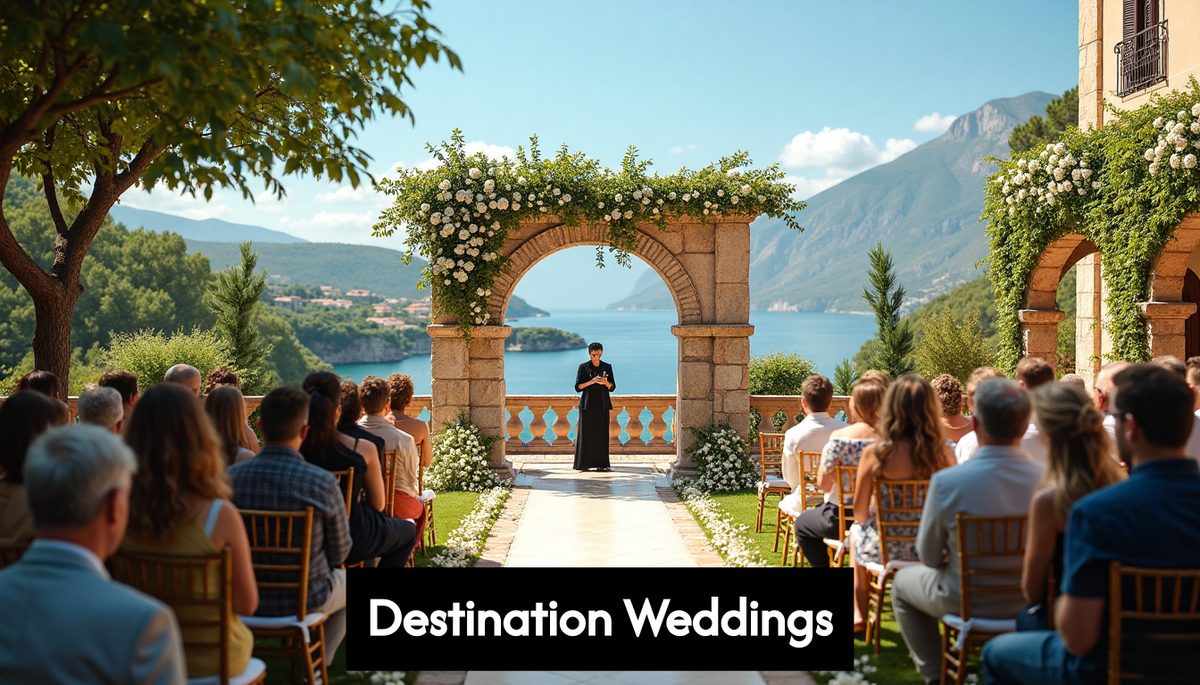
From an artistic perspective, ceremony scenes offer a wealth of visual richness. The composition naturally includes the couple, the officiant, the wedding party, the seated guests, and the venue architecture or landscape. In Spain, ceremony settings are often breathtaking — a sun-drenched terrace overlooking the sea in Marbella, a garden draped in wisteria, a centuries-old chapel glowing in afternoon light.
The painter arrives early, sets up their easel with a clear view of the ceremony space, and begins sketching the scene before the ceremony starts. Once the processional begins, they work with focused intensity, capturing the key figures and the emotional atmosphere in real time.
The First Dance
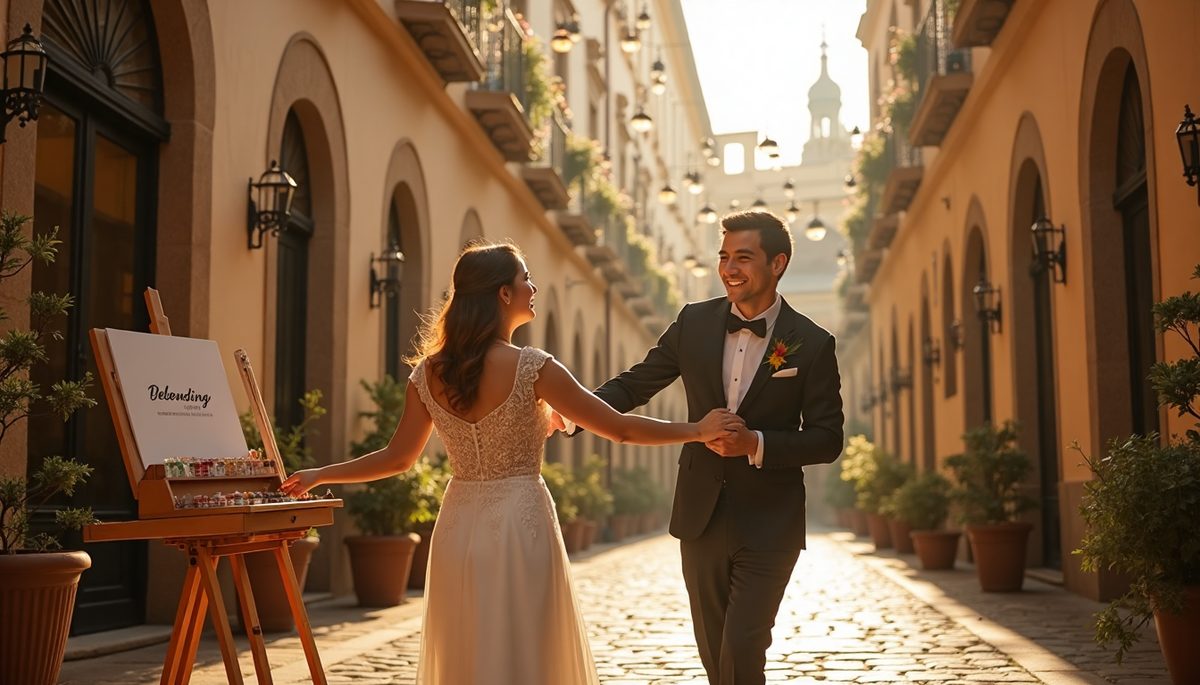
The first dance is a moment of pure romance and movement. It is the couple, alone on the dance floor (at least for a few bars), sharing a private moment in a public space. The contrast between the intimacy of their embrace and the surrounding crowd creates a naturally compelling composition.
Painting the first dance requires speed and confidence. The couple is in motion, the lighting is dramatic, and the moment is brief. Marta often begins by painting the dance floor, the lighting, and the surrounding guests before the dance starts, so that when the couple takes the floor, she can focus entirely on capturing their movement and expression.
The resulting painting is typically more impressionistic than a ceremony scene, with looser brushwork that conveys the swirl of the dress, the warmth of the spotlight, and the tender closeness of the couple.
The Sunset Moment
Spain is blessed with some of the most spectacular sunsets in Europe, and couples who time their celebration to coincide with the golden hour are rewarded with a visual feast. A painting of the couple silhouetted against a blazing Mediterranean sky — or walking hand in hand along a terrace as the sun dips below the horizon — is one of the most dramatic and romantic compositions available.
The challenge with a sunset painting is timing. The golden hour is brief, and the colors change rapidly. The painter must be positioned and ready when the sky begins to glow, working quickly to capture the shifting palette of oranges, pinks, and purples. The reward is a painting that radiates warmth and romance.
The Speeches
Wedding speeches are moments of emotion, humor, and sometimes tears. A painting that captures the best man mid-story, the father of the bride wiping away a tear, or the couple listening with glowing faces is a deeply personal and narrative composition.
Speech paintings are less commonly requested than ceremony or first dance paintings, but they offer something unique: they capture a specific story within the larger story of the day. The artist focuses on expressions, gestures, and the emotional energy between the speaker and the couple.
The Reception in Full Swing
A wide-angle view of the reception at its peak — tables decorated, guests laughing and dancing, the venue lit with candles and string lights — captures the collective joy of the celebration. This type of painting is more about atmosphere and energy than any single moment.
The painter typically positions themselves at the edge of the space and works over several hours, building the composition gradually as the evening unfolds. Guests may come and go, the lighting may change, and new elements may appear (the dance floor filling up, sparklers being lit), and the artist weaves all of these into a cohesive scene.
The Quiet Moment
Not every meaningful moment is a grand one. Sometimes the most powerful painting captures a quiet, private instant — the couple stealing a moment alone on a balcony, the bride looking at her reflection before the ceremony, the groom reading a letter from his partner.
These paintings are deeply intimate and require a different kind of observation. The painter must be attuned to the subtle, unscripted moments that happen in the margins of the celebration. At destination weddings in Spain, where the venues often include secluded gardens, rooftop terraces, and hidden courtyards, these quiet moments happen naturally. If you are planning a celebration abroad, our article on live art at destination weddings explores how painters bring these unique settings to life on canvas.
How the Artist Prepares for the Moment
Capturing a wedding moment in art is not something that happens by accident. It requires careful preparation:
Venue Research
The artist studies the venue in advance, reviewing photographs, floor plans, and (when possible) visiting in person. This allows them to identify the best vantage points, understand the light at different times of day, and plan their setup location.
Timeline Review
A detailed timeline from the couple or wedding planner tells the artist exactly when key moments will occur. Knowing that the ceremony starts at 5 PM and the first dance is at 9 PM allows the artist to plan their energy, materials, and focus accordingly.
Palette Preparation
Based on the venue, the time of day, and the couple’s color scheme, the artist pre-mixes key colors and prepares their palette before arriving. This saves precious time during the live painting session.
Mental Rehearsal
Experienced wedding painters mentally rehearse the composition before the day. They visualize where the couple will stand, how the light will fall, and what the surrounding scene will look like. This mental preparation allows them to work with speed and confidence when the moment arrives.
The Artist’s Eye: What Makes a Moment Paintable
Not every moment translates equally well into a painting. The most paintable moments tend to share certain qualities:
- Strong composition. The arrangement of figures and space creates a naturally balanced and pleasing image.
- Emotional clarity. The emotion of the moment is visible and legible — joy, tenderness, excitement, reverence.
- Visual interest. The scene contains a variety of colors, textures, shapes, and lighting conditions that give the painter material to work with.
- Duration. The moment lasts long enough for the painter to observe and capture it. A ceremony lasts 20 to 30 minutes; a first dance lasts 3 to 5 minutes. Both are paintable but require different approaches.
- Personal significance. Above all, the moment matters to the couple. A technically beautiful scene that holds no emotional weight for the couple is less compelling than a simple moment that is deeply meaningful.
From Moment to Masterpiece
The journey from a fleeting wedding moment to a finished painting is a process of translation. The artist observes, interprets, and transforms what they see and feel into marks on a canvas. They make a thousand decisions — about color, brushstroke, composition, emphasis, and omission — and each decision shapes the final result.
What makes a great wedding painter is not just technical skill but emotional intelligence: the ability to see what matters most in a scene and to convey that meaning through art. It is why a painting can capture something that even the best photograph sometimes misses — the feeling of the moment, not just its appearance. For a full exploration of how these two art forms complement each other, read our guide on live wedding painting vs photography.
At Wedding Vivid Art, Marta approaches every wedding with this philosophy. She is not simply recording what she sees; she is interpreting the emotional truth of the celebration and preserving it in a form that will endure for generations.
Want to capture the most meaningful moments of your wedding through art? Contact Marta at Wedding Vivid Art to discuss which moment would make the perfect painting.