Live Wedding Painting vs Photography: Why You Need Both
Live Wedding Painting vs Photography: Why You Need Both
In the age of high-resolution cameras, drone footage, and instant social media sharing, it might seem like photography and videography have the wedding memory market covered. So when couples first hear about live wedding painting, a natural question arises: why would I need a painting when I already have a photographer?
The answer is that live wedding painting and photography are not competing services. They are complementary art forms that capture entirely different dimensions of your celebration. Together, they provide the most complete, emotionally rich, and visually stunning record of your wedding day. Understanding how they differ — and how they work together — will help you appreciate why more and more couples are choosing to invest in both.
What Photography Captures
Let us start by acknowledging what wedding photography does brilliantly. A skilled photographer freezes precise moments in time with remarkable accuracy. The tear rolling down a parent’s cheek. The exact expression on your face as you see your partner for the first time. The intricate detail of your rings, your flowers, and your dress. These are irreplaceable records that document the facts of your day with clarity and precision.
Modern wedding photography has evolved into a genuine art form. The best photographers bring a cinematic eye, an understanding of light, and a talent for composition that elevates their work far beyond simple documentation. They capture hundreds, sometimes thousands, of images over the course of a day, ensuring that no significant moment goes unrecorded.
Photography excels at:
- Freezing split-second moments that happen too fast for the eye to fully register
- Documenting details such as jewelry, decor, table settings, and attire
- Capturing candid expressions from guests throughout the celebration
- Recording the full timeline of the day from preparation to departure
- Providing large quantities of images for sharing with guests and family
These are genuine strengths, and no couple should consider forgoing photography in favor of a painting. But photography, for all its power, has limitations that are inherent to the medium — and this is where live wedding painting enters the conversation.
What a Painting Captures That a Photo Cannot
Atmosphere and Emotion
A photograph captures a fraction of a second. A painting captures the feeling of hours distilled into a single image. When a live wedding painter works at your celebration, they are absorbing the atmosphere over an extended period: the quality of the light as it changes through the afternoon, the emotional arc of the ceremony, the energy of the dance floor, and the subtle interactions between guests.
All of these observations are woven into the painting, creating an image that holds far more emotional information than any single photograph can contain. When you look at your wedding painting years later, you do not just see what your ceremony looked like — you feel what it was like to be there.
The Artist’s Interpretation
A camera records light mechanically. A painter interprets light through their own sensibility, training, and emotional response. This is a fundamental difference. Your photographer sees your wedding through a viewfinder. Your painter sees it through the lens of artistic tradition, personal style, and creative intuition.
This means that a painting can emphasize what matters most about a scene while gently de-emphasizing the distractions. The painter can heighten the golden warmth of the sunset, deepen the richness of the flowers, and bring a luminous quality to the skin tones that reflects how beautiful everyone truly looked. It is not about distorting reality but about revealing the beauty that the camera’s mechanical eye sometimes misses.
A Sense of Timelessness
Photographs are of their time. A wedding photo from 2026 will always look like a photo from 2026, shaped by the trends in editing, composition, and style that define the era. Paintings, by contrast, transcend time. An oil painting of your ceremony will look as beautiful and relevant in fifty years as it does today. There is a reason museums are filled with paintings that remain compelling after centuries, while daguerreotypes from the 1800s primarily attract historical interest.
When your grandchildren look at your wedding painting, they will see a work of art that speaks to them as directly as it speaks to you. It will not feel dated. It will feel timeless. For a deeper exploration of why paintings become treasured heirlooms, read our article on preserving wedding memories in art.
Physical Presence
A wedding photograph lives on a screen or in an album. A wedding painting lives on your wall. It has physical presence: texture, dimension, the subtle variations of brushstrokes that catch the light differently throughout the day. Walking into a room and being greeted by a large, luminous painting of your wedding day is an experience that a framed print, no matter how beautiful, cannot replicate.
There is something about an original painting that commands attention and respect in a way that reproductions do not. Guests in your home will be drawn to it. They will lean in to examine the brushwork. They will ask about it. And every time someone does, you will relive the joy of that day.
How They Complement Each Other
Coverage and Depth
Your photographer provides breadth of coverage: hundreds of images that document the full scope of your day. Your painting provides depth: a single, handcrafted image that distills the emotional essence of your celebration into one powerful composition.
Together, they give you both the forest and the trees. You have the photograph of your grandmother’s expression during the toast and the painting that captures the warm, golden atmosphere of the room in which that toast was given.
Different Moments, Different Perspectives
Photographs and paintings often capture different moments of the wedding day, providing complementary perspectives. Your photographer might focus on candid moments, portraits, and details. Your painter might concentrate on the ceremony scene, the first dance, or a wide view of the reception that encompasses the full scope of your celebration.
Many couples choose to have their painter capture a different moment than their photographer’s key shots, ensuring that even more of the day is preserved in art.
The Live Experience
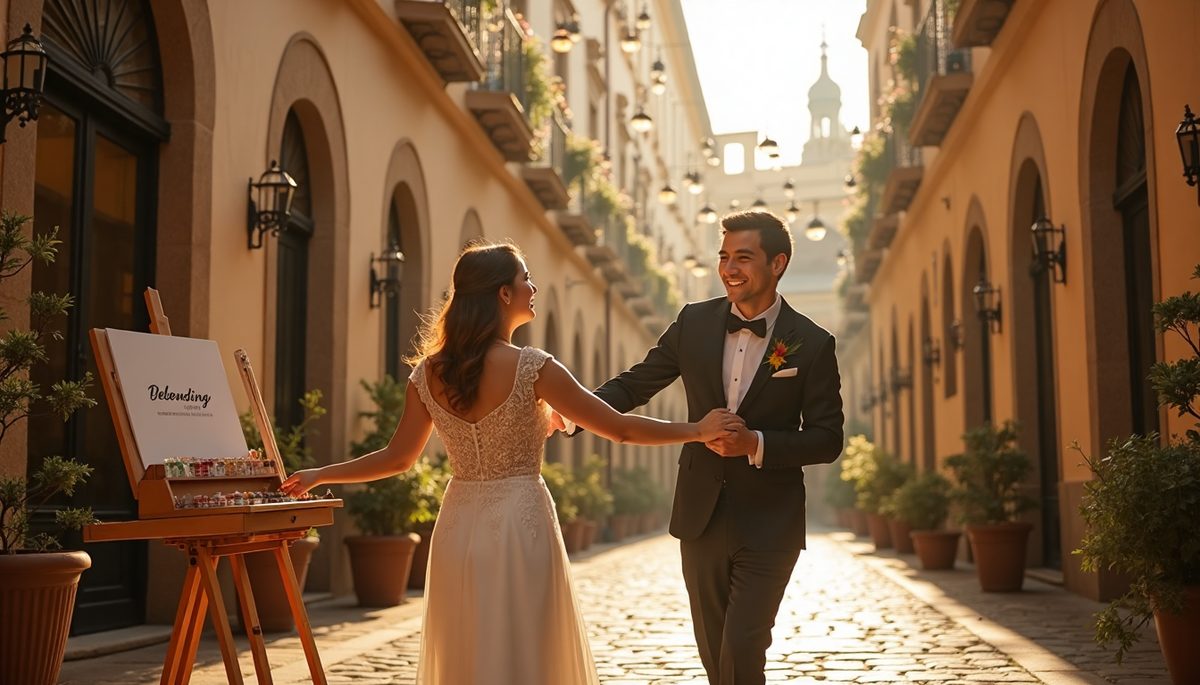
A photographer works quickly and quietly, blending into the background. A live wedding painter, by contrast, becomes a part of the event itself. The easel set up in a corner of the reception becomes a gathering point for curious guests. The painting evolving in real time provides entertainment and fascination throughout the celebration.
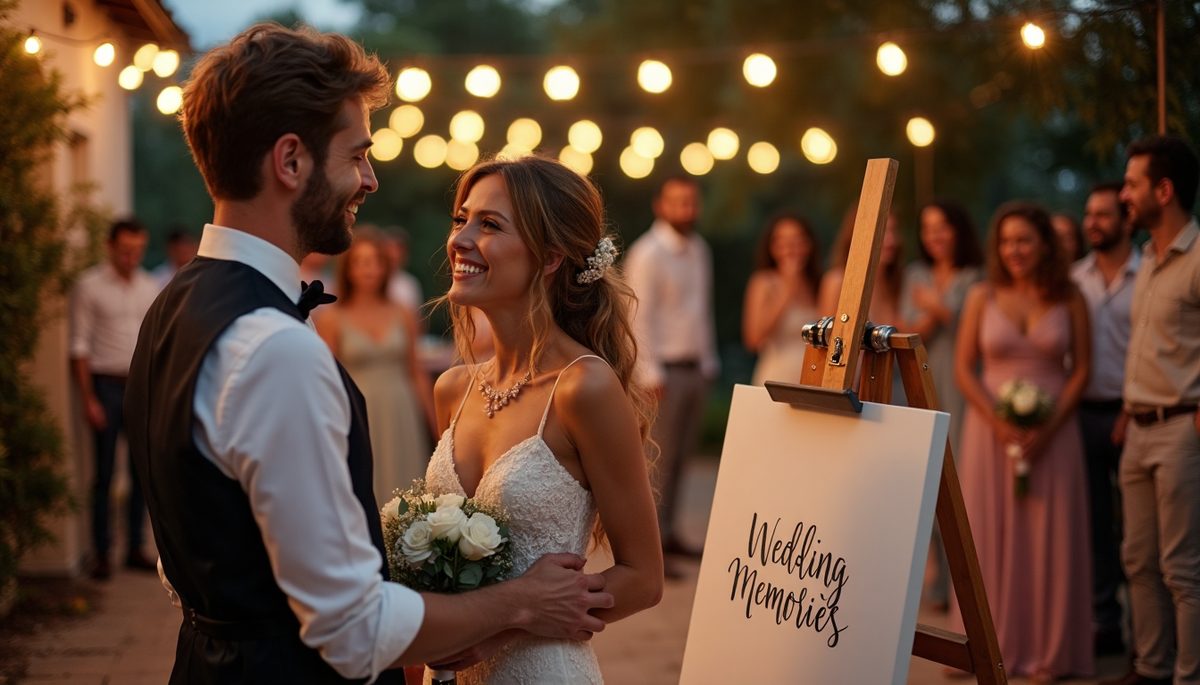
This live element adds a dimension that photography cannot offer. Your guests will remember watching the painting take shape. Some will return to the easel multiple times over the course of the evening, marveling at the progress. This shared experience becomes part of the wedding story itself. To learn more about the many ways a painter elevates your celebration, read our article on how art enhances your wedding day.
Digital and Physical
In our increasingly digital world, there is a powerful appeal in owning something handmade and physical. Your wedding photographs will likely live primarily on hard drives, phones, and social media feeds. Your wedding painting will hang on your wall, a tangible, irreplaceable object that you can touch, that changes subtly with the light, and that will never require a software update to view.
This combination of digital abundance and physical singularity gives you the best of both worlds.
Real Examples of How Both Work Together
The Ceremony
Your photographer captures the exchange of rings from three angles, the officiant’s smile, and the guests’ reactions in crisp, detailed images. Your painter captures the entire scene in one sweeping composition: the arch of flowers, the gathered crowd, the couple at the center, all bathed in the afternoon light. The photographs tell you what happened. The painting tells you how it felt.
The First Dance
Your photographer shoots the first dance with a mix of close-ups and wide shots, freezing specific moments of movement and expression. Your painter interprets the dance as a whole: the blur of movement, the sparkle of the chandelier, the adoring faces of the guests watching from the edges of the dance floor. Each medium captures a truth about the moment that the other cannot.
The Venue
Your photographer documents the venue details: the place settings, the floral arrangements, the architectural features. Your painter captures the venue as an atmosphere: the way the walls glow in candlelight, the depth of the garden beyond the terrace, the sense of space and occasion that makes the venue feel like a character in the story of your day.
Planning for Both
If you decide to include both a photographer and a live wedding painter, a little coordination ensures the best results.
Discuss Positioning
Your photographer and painter should briefly connect before or at the start of the event to discuss their respective positions. A painter needs a stable vantage point with a good view of the chosen scene, while a photographer needs freedom to move. These needs are naturally compatible, and a brief conversation prevents any awkwardness.
Separate the Key Moments
Consider having your photographer focus on portraits and candid moments while your painter captures the ceremony scene or reception atmosphere. This maximizes the variety of your wedding documentation and ensures neither artist is competing for the same angle.
Embrace the Collaboration
Many photographers love the addition of a live painter. They often capture stunning images of the artist at work, easel and all, which make for unique and memorable photographs. The painter becomes part of the visual story of the day.
The Complete Wedding Memory
When you combine photography and live painting, you create a wedding memory that is comprehensive, multidimensional, and deeply personal.
Your photographs give you the facts: every face, every detail, every fleeting expression. Your painting gives you the feeling: the warmth, the light, the atmosphere, and the emotion of the day distilled into a single, handcrafted work of art.
Together, they ensure that your wedding is not just documented but truly remembered — in all its beauty, all its emotion, and all its irreplaceable significance.
At Wedding Vivid Art, Marta works seamlessly alongside photographers and videographers to ensure that every aspect of your celebration is captured. She understands the dynamics of a busy wedding day and positions herself to create stunning art without interfering with your photography team’s work.
Want to add a new dimension to your wedding memories? Contact Marta at Wedding Vivid Art to discuss how live painting can complement your photography and give you the complete picture of your perfect day.