What to Expect When You Hire a Live Wedding Painter
What to Expect When You Hire a Live Wedding Painter
The idea of having a live wedding painter at your celebration is exciting, but if you have never experienced it before, it is natural to have questions. How does the process work from start to finish? What happens on the day? Where does the painter set up? Will they interact with your guests? When do you receive the finished painting?
This comprehensive guide answers every question you might have about hiring a live wedding painter, so you can feel fully prepared and confident that this unique addition to your celebration will be everything you hope for.
The Booking Process
Initial Inquiry
The journey begins when you reach out to a wedding painter to express your interest. This initial contact can be as simple as sending an email or filling out a contact form with basic information: your wedding date, venue location, and what you have in mind.
At Wedding Vivid Art, Marta responds to every inquiry personally, typically within 24 to 48 hours. She appreciates hearing about your vision, even if it is still forming, because every detail helps her understand how to best serve your celebration.
The Consultation
Once you have made initial contact, the next step is a consultation. This is usually conducted via video call, although in-person meetings are possible for couples in southern Spain. During the consultation, you will discuss:
- Your wedding vision: The overall style and mood of your celebration
- The venue: Its layout, lighting conditions, indoor or outdoor settings, and any architectural features worth highlighting
- Painting style preferences: Whether you lean toward impressionistic, realistic, or another approach
- Key moments: Which moment or scene you would most like captured — the ceremony, first dance, reception overview, or another significant moment
- Canvas size: Based on where you plan to display the painting in your home
- Timeline: How long you would like the painter present at your event
- Budget: An honest conversation about pricing and what different options include (for a detailed breakdown, see our guide to live wedding painter costs in Spain)
This consultation is also your opportunity to ask questions, review the artist’s portfolio in detail, and get a sense of whether the artist’s personality and working style are a good fit for your celebration. A wedding painter becomes part of your wedding day, so feeling comfortable and connected is important.
Securing Your Date
Wedding painters, especially experienced ones, book up quickly during peak season. Once you have decided to proceed, a signed contract and a deposit (typically 30 to 50 percent of the total fee) will secure your date. The contract will outline everything that has been agreed upon: the date, venue, hours of coverage, canvas size, style, and delivery timeline.
Securing your date early is particularly important for weddings in popular months like June, July, August, and September. Marta recommends booking at least 6 to 12 months in advance, especially for destination weddings in high-demand locations like Marbella, Ibiza, or Barcelona.
Pre-Wedding Planning
In the weeks leading up to your wedding, your painter will stay in touch to finalize details. This might include:
- Reviewing venue photos or visiting the venue if geography allows
- Discussing the day-of timeline so the painter knows when key moments will occur
- Coordinating with your wedding planner to ensure smooth logistics
- Confirming colors and palette: Some painters like to know the color scheme of your wedding to ensure the painting harmonizes with your aesthetic
- Finalizing setup location: Identifying the best spot for the easel based on the venue layout and the scene to be painted
What Happens on the Wedding Day
Arrival and Setup
Your painter will arrive well before the moment they plan to capture, typically 30 to 60 minutes early. This allows time to assess the light, finalize the best vantage point, set up the easel and materials, and begin a preliminary sketch on the canvas.
The setup is unobtrusive. A professional wedding painter needs surprisingly little space: an easel, a small table or cart for paints and brushes, and enough room to step back from the canvas. Most painters can work comfortably in an area of about two square meters.
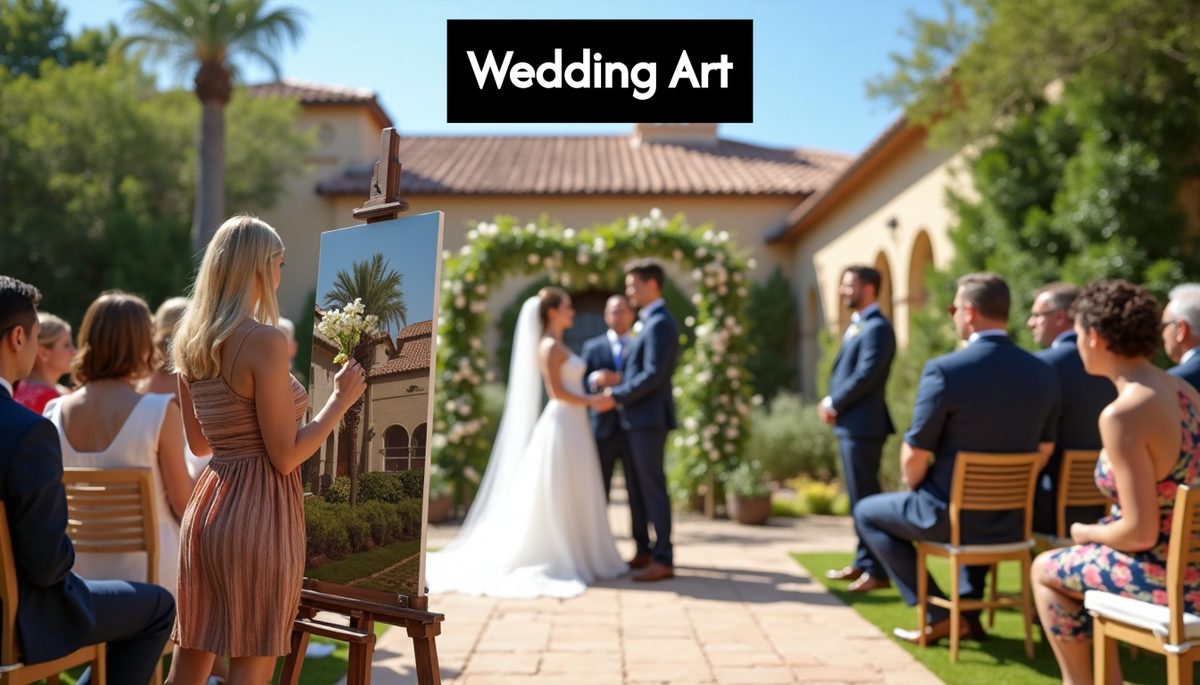
The painter will position themselves where they have a clear view of the scene while remaining out of the way of the main event, the photographer, and the flow of guests. Popular positions include:
- To the side of the ceremony aisle with a three-quarter view of the couple and the backdrop
- At the edge of the reception space with a wide view of the room or garden
- Near the dance floor for first dance paintings
- On a terrace or balcony for elevated perspective paintings
The Painting Process
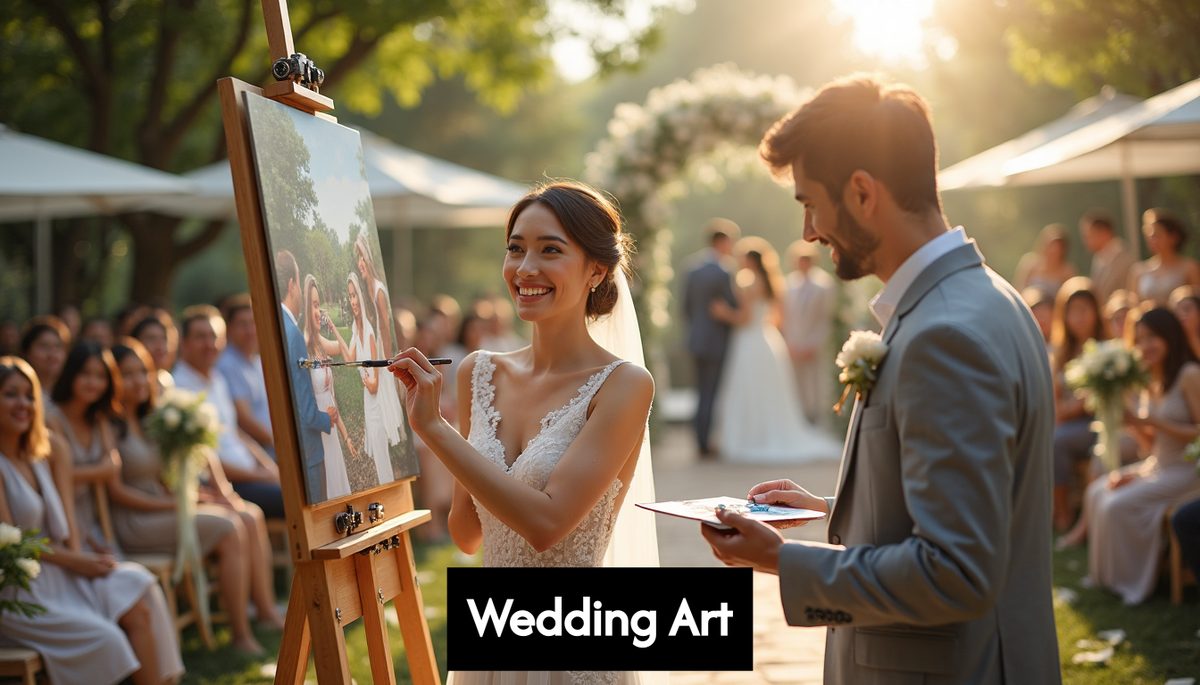
Once positioned, the painter begins with a compositional sketch, mapping out the key elements of the scene on the canvas. This initial drawing establishes the placement of figures, architectural elements, and the overall balance of the composition.
With the composition in place, the painter begins to apply color. The process typically moves from background to foreground, establishing the overall tones and atmosphere before working in progressively finer details. Depending on the style, the painter might work quickly and expressively or more carefully and methodically.
Throughout the session, the painter is constantly observing: the way light falls across the scene, the gestures and body language of the key figures, the expressions on faces, and the small moments that define the emotional character of the event. These observations are woven into the painting over the course of several hours.
A typical painting timeline looks like this:
- First 30 minutes: Compositional sketch and initial color blocking
- Hours 1 to 2: Building the overall scene, establishing atmosphere and major elements
- Hours 2 to 3: Adding figures, details, and refining the composition
- Hours 3 to 4: Final details, highlights, and adjustments
- End of session: The painting is substantially complete, though some finishing work will be done in the studio
Guest Interaction
One of the most delightful aspects of having a live wedding painter is the way guests engage with the process. It is completely natural for guests to approach the easel, watch the painting progress, ask questions, and express their admiration.
A professional wedding painter welcomes this interaction. Marta enjoys brief conversations with curious guests and is happy to explain her process. These interactions are typically warm and brief — guests understand that the painter is working and are respectful of the creative process.
Many couples find that the painting easel becomes one of the most popular spots at their reception. It gives guests something fascinating to observe and discuss, and it adds an element of creative energy to the celebration that enhances the overall atmosphere.
For more guidance on managing guest interaction and other practical considerations, read our complete guide to wedding art etiquette.
Some tips for managing guest interaction:
- Let it happen naturally. You do not need to make an announcement or direct guests to the painter. Curiosity will do the work.
- Do not worry about distraction. Experienced painters are skilled at maintaining focus while engaging warmly with guests.
- Consider the placement. If you want maximum guest interaction, position the painter near a social area. If you prefer a quieter painting process, a slightly more removed location works well.
The Reveal
Some couples choose to have a formal reveal of the painting toward the end of the reception, often during the final hour of the celebration. The painter can turn the easel toward the guests, and the couple can see the nearly completed work for the first time together. This can be a beautifully emotional moment and a memorable highlight of the evening.
Other couples prefer a more casual approach, simply visiting the easel whenever they like throughout the event. There is no right or wrong way — it is entirely up to your preference.
After the Wedding
Studio Finishing
While a skilled painter can achieve a remarkable amount during the live session, most wedding paintings benefit from some finishing work in the studio. This typically involves refining details, adjusting colors, adding final highlights, and ensuring the overall composition is balanced and complete.
The amount of studio time varies by artist and by the complexity of the painting. Simple compositions might need only a few hours of additional work. More complex or highly detailed paintings might require several sessions spread over a week or two.
At Wedding Vivid Art, Marta typically completes the finishing process within 4 to 6 weeks of the wedding. She will send you photographs of the completed painting for your approval before applying the final varnish.
Varnishing
Once the painting is complete and the paint has dried sufficiently, a protective varnish is applied. This varnish serves several important purposes:
- Protection: It shields the paint surface from dust, UV light, and minor physical damage
- Color enhancement: Varnish can deepen colors and add a subtle richness to the finished painting
- Longevity: A properly varnished painting can last for generations with minimal care
- Finish: You can typically choose between a glossy, satin, or matte varnish depending on your preference
Delivery
The finished, varnished painting is carefully packaged and delivered to your home. For local couples, Marta often delivers in person, which provides a wonderful opportunity to see the painting together and discuss framing options. For destination wedding clients, the painting is professionally packed and shipped with full insurance.
Delivery typically occurs 6 to 8 weeks after the wedding, though this timeline can be adjusted based on your needs.
Framing
While the painting is delivered unframed (to allow you to choose a frame that matches your home decor), your painter can recommend framing options and connect you with professional framers. The right frame enhances the painting and protects its edges.
Some considerations for framing:
- Style: Choose a frame that complements both the painting and your home decor
- Quality: Invest in a professional-quality frame with UV-protective glass or acrylic
- Size: The frame should enhance the painting without overwhelming it
- Color: Neutral frames (white, black, natural wood, or gold) are the most versatile choices
Frequently Asked Questions
How far in advance should I book?
We recommend booking 6 to 12 months in advance, especially for peak season weddings (June through September) and destination weddings. Popular dates can fill up quickly.
What if it rains?
Weather is a consideration for outdoor weddings, but it rarely affects the painting. If the ceremony moves indoors, the painter simply adjusts to the new setting. If you would like the painting to depict the outdoor scene regardless, many painters can work from photos and their observation of the venue to create the outdoor painting in their studio after the event.
Can the painter capture a specific moment?
Absolutely. During the consultation, you will discuss which moment you would most like captured. The most popular choices are the ceremony (exchanging vows), the first dance, and a wide view of the reception. The painter will plan their timing and positioning accordingly.
What if I do not know what I want?
That is completely normal and perfectly fine. Experienced wedding painters are skilled at guiding you through the decision-making process. They can review your venue, discuss your priorities, and make recommendations based on their experience of what works best in similar settings.
Will the painter need anything special?
Professional wedding painters bring all their own equipment and supplies. All they need from you is a confirmed location to set up and ideally access to the venue 30 to 60 minutes before the moment they plan to paint. A small table for supplies is helpful but not essential.
Can I see progress photos during the painting?
Most painters are happy to share a progress photo or two via text during the event, especially if you are not able to visit the easel regularly. This can be a fun way to stay connected to the process while you are busy celebrating.
How do I care for my painting?
A properly varnished oil or acrylic painting requires very little maintenance. Keep it out of direct, prolonged sunlight. Dust it gently with a soft, dry cloth. Avoid hanging it in rooms with extreme temperature fluctuations or high humidity (bathrooms, kitchens). With basic care, your painting will remain vibrant for generations.
Making the Most of Your Live Wedding Painting Experience
Communicate Openly
The more your painter knows about your vision, the better the result. Share inspiration images, describe the atmosphere you are hoping for, and be honest about your preferences. No detail is too small.
Trust the Artist
You hired a professional for their expertise and artistic vision. While your input is valued and essential, trust that your painter knows how to translate your celebration into a compelling work of art. The best results come from a collaborative relationship built on mutual trust and respect.
Enjoy the Process
On your wedding day, take a few moments to visit the easel and watch the painting progress. It is a rare and special experience to see your celebration being transformed into art in real time. Let yourself be present for it.
Share with Your Guests
Let your guests know that there will be a live painter at your wedding. Many couples include a mention in their wedding program or on their wedding website. This builds anticipation and ensures that guests look for the painter during the event.
A Lasting Legacy
Hiring a live wedding painter is more than a purchase — it is a decision to preserve the essence of your celebration in a form that will endure for generations. When the flowers have long wilted, when the cake has been eaten, and when the music has faded, your painting will remain. It will hang on your wall, a daily reminder of the love, joy, and beauty of the day you began your life together.
Ready to add a live painting to your wedding celebration? Contact Marta at Wedding Vivid Art to start the conversation and secure your date.